
The Yoga Studio Marketing Plan That Actually Works

When it comes to creating yoga studio marketing plans, this is what people usually think: post on Instagram, run a new client intro offer, hope for word-of-mouth. And for a while, that might be enough. Until it isn’t.
At Telomere, we’ve been working with boutique studios since 2017, supporting them with varying marketing strategies, and since then, we’ve seen the boutique fitness landscape change dramatically (over and over again).
Gen Z and Millennials make up the majority of studio attendance and their expectations are non-negotiable: seamless digital experiences, community that extends beyond the studio walls, and brands that communicate with precision and intention. At the same time, big-box gyms are leveling up, capital is flooding into fitness, and the Pilates boom has raised every consumer's bar for what a premium experience looks like.
If your yoga studio marketing plan isn't built around real data, real strategy, and a clear customer journey from discovery to long-term retention, you're leaving revenue on the table and members through the door.
Here's what actually works.
Start with the Data You Already Have

Before you spend a dollar on yoga digital marketing, pay attention to your studio management software.
Answer these four questions before investing in a yoga studio marketing plan:
Where are your new clients coming from? (Search, referral, social, walk-in?)
What does your intro offer conversion rate look like? (What percentage of first-timers become members?)
At what point do most members cancel?
What is your average client lifetime value?
These numbers tell you where to invest. A studio with a strong acquisition funnel but poor conversion should be spending less on ads and more on the first-visit experience. A studio losing members at month three has a retention problem, not a marketing problem. Throwing a budget at the top of the funnel before fixing what happens in the middle is one of the most common and most expensive mistakes studio owners make.
Your marketing plan should be built around what the data says, not what feels right.
Build Your Acquisition Engine
To make this happen, there are three key points you need to take into account:
1. Get Found Where People Are Searching
Yoga digital marketing starts with search. When someone moves to a new neighborhood, gets back into fitness after a break, or decides they're finally going to try yoga, they Google it (or more recently, go to Chat GPT!). If your studio doesn't show up, you don't exist to them.
Here are some local SEO fundamentals:
Claim and fully optimize your Google Business Profile (hours, photos, services, reviews)
Make sure your website is loading fast and mobile-optimized
Create location-specific pages if you have multiple locations
Generate reviews consistently, not just at launch, but as an ongoing system
Your website is also a conversion tool, not just a brochure. The path from "I just found this studio" to "I booked my first class" should be frictionless. One clear call to action. No confusing navigation. Intro offer front and center.
If there’s a studio that knows about this, it’s Soma Movement. When we partnered with the studio, their website was one of the first channels we worked on. Next we moved onto email and SMS automations, the website experience became seamless and, in the first two weeks, Soma sold 45 intro offers, converted 21 clients into recurring memberships, and retained 70% of first visits.

2. Run Paid Ads With Intent
Google Ads and Meta Ads can work extremely well for yoga studios, but only when they're structured correctly and tied to a specific offer. Running a generic "we're a great yoga studio" campaign with no clear conversion path is how studios burn through budget with nothing to show for it.
What performs: a targeted ad campaign driving directly to a dedicated landing page for your intro offer, with an automated follow-up sequence for anyone who clicks but doesn't convert. The goal is a closed loop, not just impressions.
Retargeting also matters here. Most people don't book on their first visit to your site. A retargeting campaign that keeps your studio in front of warm prospects is one of the highest-ROI tools available to you.
3. Build an Instagram Presence Worth Following
Instagram remains one of the most powerful organic acquisition channels for yoga studios, but it requires discipline and consistency.
A few practices that consistently drive results on Instagram:
Captions that say something. Longer, substantive captions (what some call microblogs) drive significantly more engagement than one-liners. Use the space.
A cohesive grid. When a potential client lands on your profile, they're making a judgment about your brand in seconds. Your visual identity should be consistent, intentional, and reflective of the actual experience in your studio.
Stories and Reels that show the inside. Behind-the-scenes content, teacher highlights, real client moments. This is what converts browsers into first-timers.
Engagement, not broadcasting. If you're only posting and never responding, asking questions, or re-sharing your clients' content, you're treating Instagram as a bulletin board when it isn't one.
Post consistently. Monitor what performs. Adjust.
Convert First-Timers Into Members
Acquisition gets someone in the door. Conversion keeps them there. This is where most yoga studio marketing plans fall completely short.
The first visit is more than just a class: it's the single most important moment in your client relationship. It is a promise about what membership will feel like. Whether that promise is kept or broken in the first 60 to 90 minutes determines whether a visitor becomes a member, and whether a member becomes an advocate.
For the first visit, every touchpoint matters:
Booking experience: Is it seamless, or is there friction?
Arrival experience: Is someone expecting them? Do they feel welcomed or like they're figuring it out alone?
The class itself: Does the instruction meet the expectation that your marketing set?
Post-class follow-up: Is there a structured conversation about membership, or does the relationship just end?
Studios that treat the first visit as a sales event rather than a hospitality moment will always struggle to convert. Your intro offer is marketing, but what happens during that offer is everything.
And after that, make sure to automate your follow-up. Every first-timer should receive a personalized follow-up within 24 hours. Not a generic "thanks for coming," but a message that references the class they took, what the next step looks like, and makes it easy to say yes to a membership.
This is what we did with Yoga Deck when they were struggling with clients engaging through drop-in visits and short-term class packs rather than committing as long-term members. By working on the intro offer, redesigning membership details and building an automated client journey, the studio’s subscription revenue grew 23% over the year and the number of active members grew by 31%.

Keep the Members You've Earned
Retention is the most underinvested area in yoga studio marketing. Studios will spend hundreds of dollars acquiring a new client and almost nothing keeping them engaged past the three-month mark.
Here's what drives retention:
Community. Clients who feel socially connected to your studio (who have friends in class, who know the front desk team by name, who feel like they belong) cancel at dramatically lower rates than those who don't. Community doesn't happen by accident. It's built through intentional programming: events, challenges, partnerships with local businesses, client appreciation moments, online spaces where members can connect outside class.
Personalized communication. Generic email blasts perform worse every year. Your studio software has the data to segment your communications by membership type, attendance frequency, and client milestones. Use it. A message to someone who hasn't been in two weeks should look different from a message to your most loyal members.
Referral programs. Your existing members are your best acquisition channel. However, most studios don't have a structured system to activate them. A referral program with a real incentive (studio credit, a complimentary class, a partnership gift card) creates a compounding acquisition engine. If your software allows automation, set it up now. If not, track it manually and reward it consistently.
Summer retention strategy. The summer slump is real, but it's predictable, which means it's often preventable. With summer-specific programming, outdoor class formats, members-only events, and targeted re-engagement campaigns for clients who've reduced their attendance, you can protect your revenue during slower months.
Build Your Email and SMS Infrastructure
Email and SMS are consistently the highest-ROI channels in a yoga studio's marketing mix. Yet, they're the most underutilized.
AUTOMATIONS YOU NEED IN YOUR Email marketing:
Welcome series for new clients (automated, personalized, sequenced)
Re-engagement campaigns for lapsed members
Monthly newsletters that provide real value, not just promotions
Milestone emails (first class anniversary, attendance milestones)
COMMUNICATION YOU CAN DO BY SMS:
Waitlist notifications (directly drives class fill rates)
Pre-class reminders
Time-sensitive offers to warm leads
Two-way communication for high-touch client relationships
The studios getting the best results from these channels are running them with the same intention and consistency as their in-studio experience. Not spray-and-pray. Targeted, segmented, timely.
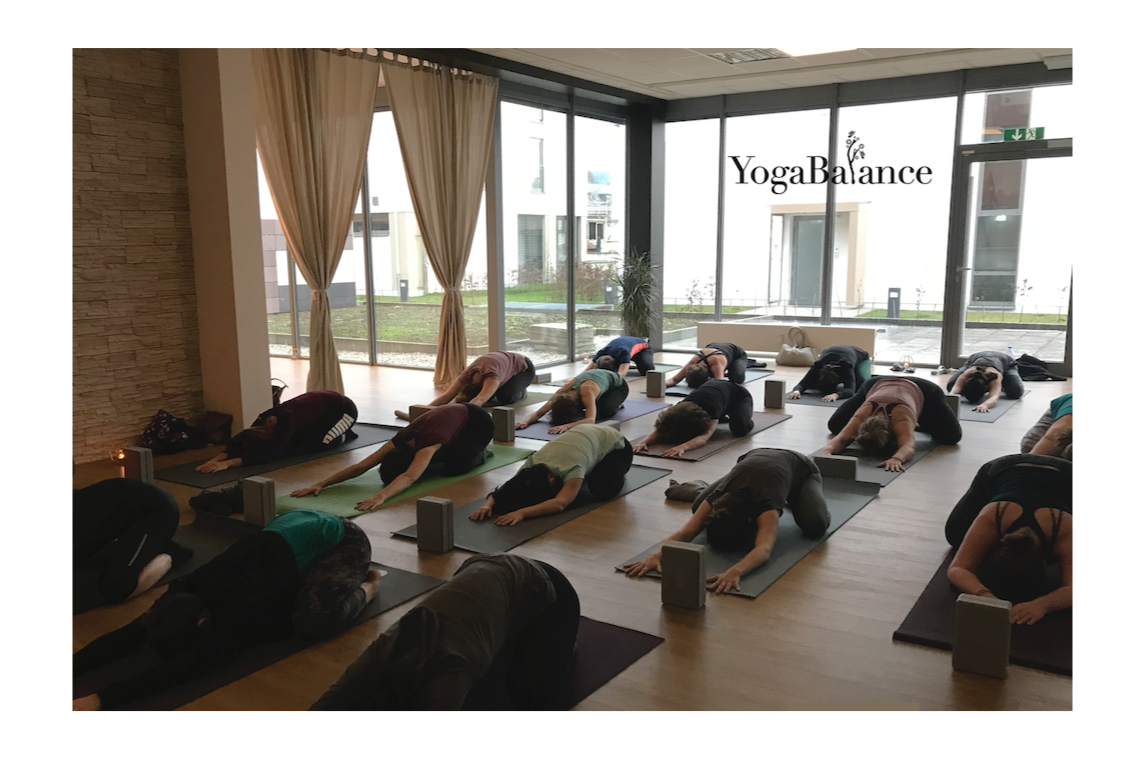
A successful example is YogaBalance. The studio owner, Jennifer Crisman, was looking to communicate with her current clients and also engage with prospects so they became regular members. As Telomere, we blended the right mix of email and SMS messaging to nurture members and contact prospects, resulting in deeper client bonds and a 13% increase in new membership revenue.
Measure What Matters
A yoga studio marketing plan without measurement is just a to-do list.
These are the metrics that actually matter for a yoga studio:
New client acquisition rate (monthly new clients and their source)
Intro offer conversion rate (first-timers to members)
Member retention rate (monthly and at the 3-, 6-, 12-month mark)
Average client lifetime value
Email and SMS open and click rates
Social media engagement rate (not just follower count)
Review these monthly. If a channel isn't moving the numbers, adjust or reallocate. If something is working, invest more. The best marketing plans are living documents, not annual exercises.

Let’s Build Your Yoga Studio Marketing Plan Together
A yoga studio marketing plan that actually works is not a collection of tactics. It's a system: one that brings the right people in, delivers on the promise of the first visit, converts them into members, builds the kind of community that keeps them loyal, and reactivates them when they drift.
The studios that are growing in 2026 are the ones that have built this system intentionally, with data, discipline and a clear understanding of what their numbers are telling them.
If you're ready to build a marketing strategy grounded in what actually drives results for yoga studios, let’s talk. We've worked with hundreds of studios across yoga, Pilates, Lagree and beyond.
Take a look at our clients’ experiences and tell us how you want us to help your studio. We're here to help you build something that lasts.
Telomere Consulting provides business consulting and marketing services to studio owners in the boutique fitness and yoga space. The Telomere team helps you navigate business strategy from conception to implementation. We provide end-to-end marketing support and would love to hear from you. Click here to book your free intro call. We want you to treat your business the way you treat your body – making the right choices now to optimize its potential for a long and healthy life. Visit us here to learn more.